
This article is the fifth and final installment in our ongoing wound care series focused on pressure ulcers, nursing home negligence, and wound-related litigation. In this final article, we examine the most devastating outcomes associated with pressure ulcers: amputation and wrongful death.
When a Pressure Ulcer Becomes More Than a Wound
For many families, it is difficult to imagine how a bedsore could lead to the loss of a limb or the loss of life. Yet in some cases, wounds that begin as localized areas of skin breakdown progress into catastrophic injuries with irreversible consequences.
Pressure ulcers are often discussed in terms of skin injury, but advanced wounds can affect far more than the skin itself.
As tissue damage progresses, the wound may extend into muscle, tendons, joints, and bone. Infection may spread beyond the wound and begin affecting other parts of the body. Residents who are already medically vulnerable may experience significant declines in strength, mobility, nutrition, and overall health.
By the time a pressure ulcer reaches its most advanced stages, treatment often becomes far more complicated than wound care alone.
In some cases, the focus shifts from healing the wound to preventing the loss of a limb, controlling a severe infection, or attempting to save the resident’s life.
How Pressure Ulcers Can Lead to Amputation
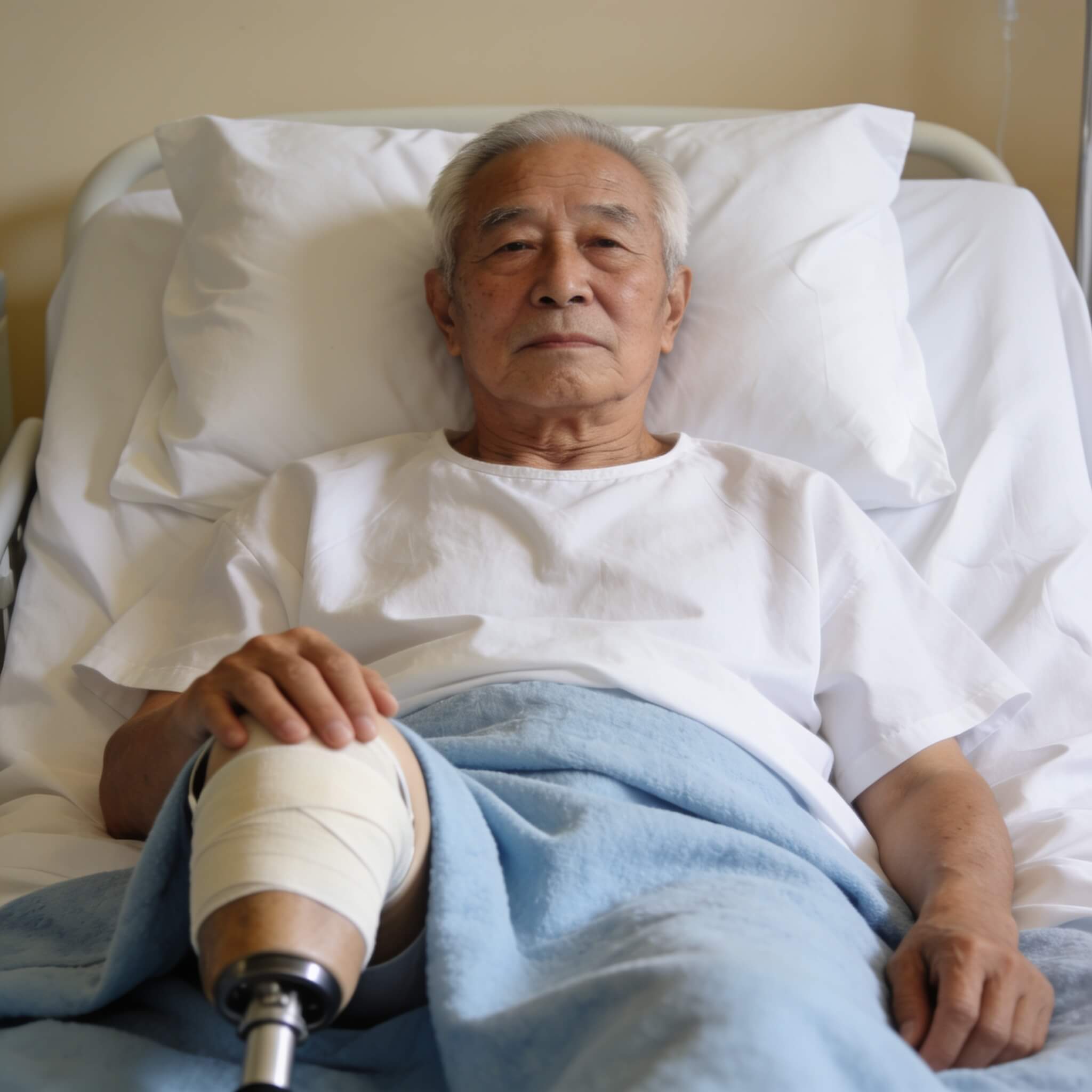
Many families are surprised to learn that severe pressure ulcers can sometimes contribute to amputation.
This typically occurs when a wound becomes so advanced that surrounding tissue, blood vessels, or bone can no longer be preserved. Severe infection, extensive tissue death, or chronic non-healing wounds may leave physicians with limited treatment options.
In some situations, amputation is performed to prevent a life-threatening infection from spreading further throughout the body.
The risk can be particularly high for residents who already suffer from conditions such as diabetes, peripheral vascular disease, or poor circulation. These conditions may reduce blood flow to affected areas, making wounds more difficult to heal and increasing the likelihood of serious complications.
For elderly residents, the consequences of amputation can be profound.
The loss of a limb may permanently affect mobility, independence, potential rehabilitation, and overall quality of life. Many residents who undergo amputation face additional medical complications, prolonged hospitalizations, and significant emotional and financial challenges during recovery.
The Connection Between Pressure Ulcers and Wrongful Death
Not every resident who develops a pressure ulcer will face life-threatening complications. However, severe wounds can contribute to death when complications become overwhelming or treatment is delayed.
Pressure ulcers are often associated with:
- Severe infection
- Sepsis
- Osteomyelitis
- Malnutrition
- Dehydration
- Significant physical decline
In some cases, a resident’s body simply becomes unable to withstand the cumulative effects of these complications.
Families are often told that their loved one was elderly, medically fragile, or already suffering from multiple health conditions. While those factors may be true, they do not necessarily answer the most important question:
Could appropriate prevention, monitoring, treatment, or intervention have changed the outcome?
That question frequently becomes central when evaluating whether a pressure ulcer contributed to a resident’s death.
Loss of Dignity Often Accompanies Advanced Pressure Ulcers
The physical consequences of advanced pressure ulcers are only part of the story.
Many residents experiencing severe wound complications become increasingly dependent on others for nearly every aspect of daily life. They may endure chronic pain, repeated hospitalizations, invasive procedures, isolation from family activities, and a loss of independence.
Some residents spend weeks or months undergoing wound treatments that can be physically and emotionally exhausting.
Families often describe feelings of helplessness as they watch a loved one’s condition deteriorate despite repeated efforts to obtain answers or additional care.
In many cases, the injury affects not only the resident but the entire family.
Warning Signs That a Serious Situation May Be Developing
Families are not expected to diagnose pressure ulcers or manage complex wound care. However, recognizing signs that a resident’s condition may be worsening can be important.
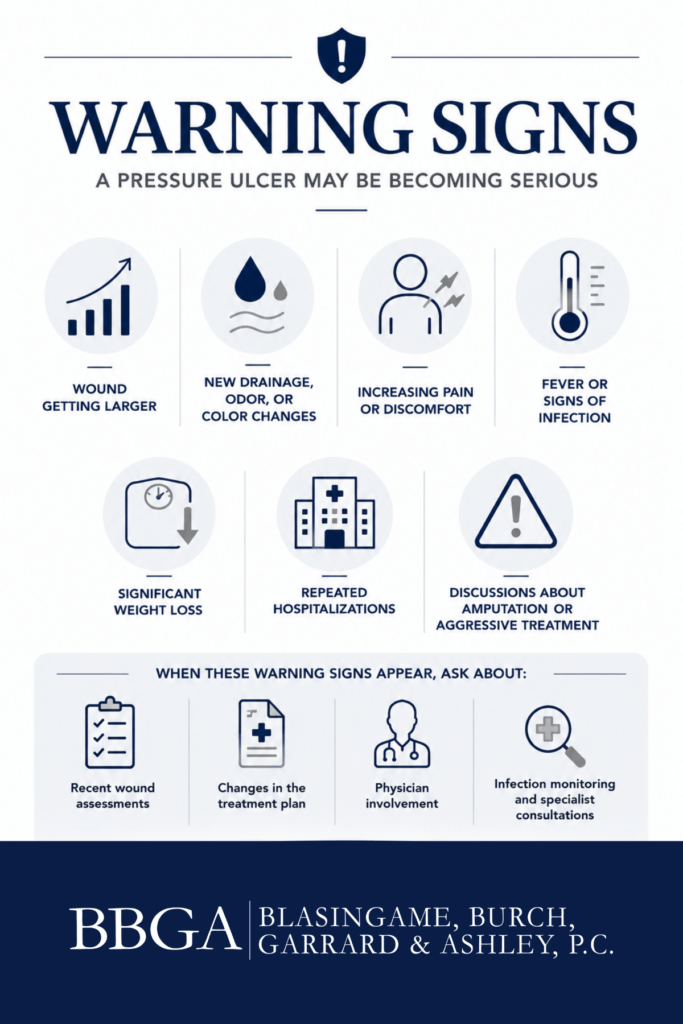
Potential warning signs may include:
- A wound that continues to grow despite treatment
- New drainage, odor, or discoloration
- Increasing pain or discomfort
- Fever or signs of infection
- Significant weight loss
- Repeated hospitalizations related to wound complications
- Discussions about amputation or aggressive infection treatment
When these issues arise, families may want to ask questions about the resident’s treatment plan, recent wound assessments, physician involvement, and whether specialists have been consulted.
Understanding Responsibility After a Catastrophic Outcome
Cases involving amputation or wrongful death are rarely defined by a single event.
More often, they involve a series of decisions, missed opportunities, communication failures, delayed interventions, or breakdowns in care that occur over time.
Evaluating these situations often requires reviewing medical records, wound assessments, physician orders, staffing documentation, hospital records, and treatment timelines to understand how the resident’s condition progressed.
In some cases, responsibility may involve more than one healthcare provider or facility.
Determining what happened often requires reconstructing the resident’s care over weeks or months and examining whether established standards of care were followed throughout the course of treatment.
Questions About a Loved One’s Care?
Pressure ulcer cases involving amputation or wrongful death are among the most complex nursing home negligence cases families may encounter. They often involve extensive medical records, multiple healthcare providers, and difficult questions about prevention, treatment, infection management, and overall quality of care.
Our attorneys have extensive experience handling complex wound care cases and understand how to evaluate whether appropriate standards of care were followed. If you have questions about a loved one in a nursing home, or if someone you care about has suffered a serious pressure ulcer injury, we encourage you to reach out.
You can call us at 706-354-4000 or complete our online contact form. We offer free case evaluations, and there is no fee unless we recover money for you in your case.
A Final Word About This Series
Thank you for following along with our wound care series.
Pressure ulcers are often preventable injuries, yet they remain one of the most significant indicators that something may be wrong in a nursing home or long-term care setting. We hope this series has provided families with a better understanding of how these injuries develop, how they should be treated, and the questions that may arise when care falls below accepted standards.
For additional resources on wound care, nursing home negligence, and pressure ulcer litigation, we invite you to explore the related articles below and other resources that are available throughout our website.
Related Posts
Bedsores in Nursing Homes: When Pressure Ulcers May Be a Sign of Neglect
Understanding Medical Malpractice in Bedsore Cases
Infected Bedsores, Sepsis, and Osteomyelitis: When Wounds Become Life-Threatening
Who Is Responsible When a Bedsore Worsens After a Hospital or Nursing Home Transfer?
Understanding the Braden Scale and Norton Scale in Nursing Homes