
Childbirth can change quickly. While many deliveries proceed without complication, labor does not always go as planned, and medical professionals must be prepared to respond when warning signs appear.
One of the most important decisions during labor is whether a cesarean section, commonly known as a C-section, is necessary to safely deliver a baby. When complications arise and a C-section is not performed in time, the consequences can be devastating.
Parents whose child has suffered a serious birth injury are often left with difficult questions. They may wonder whether something went wrong during labor, whether warning signs were missed, or whether a C-section should have been performed sooner.
In this final installment of our Childbirth Injury Series, we take a closer look at delayed C-sections, when they should be considered, why delays sometimes occur, and how timing during labor can affect a baby’s outcome.
What Is a Delayed C-Section?
A delayed C-section generally refers to a situation where medical professionals recognize, or should recognize, that a baby is in distress but do not move quickly enough to deliver the baby surgically.
During labor, doctors and nurses continually evaluate whether the baby is tolerating contractions and whether labor is progressing safely. If signs appear that the baby is not receiving enough oxygen or that labor is not progressing normally, a cesarean section may be necessary to prevent injury.
When those warning signs are not addressed in time, the delay can allow oxygen deprivation or other complications to worsen. In some cases, even a relatively short delay can have lasting consequences.
When Should a C-Section Be Considered?
A C-section may be considered when complications arise that make vaginal delivery unsafe for the baby or the mother. These decisions depend on what medical professionals observe during labor, including fetal heart monitoring, the progress of the delivery, and the presence of certain medical conditions.
Some situations where a C-section may become necessary include:
• Signs of fetal distress
• Umbilical cord complications
• Placental problems such as placental abruption (a serious complication where the placenta detaches from the uterus before delivery)
• Failure of labor to progress
• Uterine rupture
• Excessively frequent contractions caused by medications such as Pitocin
In these situations, the medical team must determine whether continuing labor poses a risk to the baby and whether surgical delivery is the safest option.
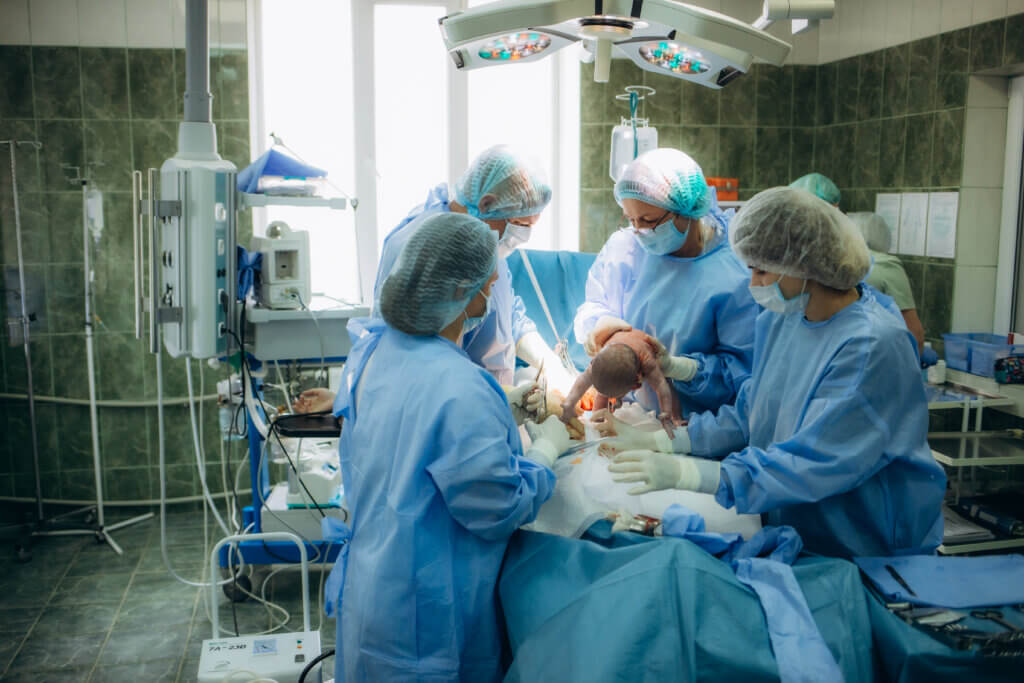
How Doctors Determine Whether a C-Section Is Necessary
Medical professionals rely on several sources of information when evaluating whether a C-section is needed.
One of the most important tools is fetal heart monitoring, which tracks how the baby is responding to contractions and other stress during labor. As discussed in our previous article on fetal heart monitoring, changes in a baby’s heart rate pattern can signal that the baby may not be tolerating labor well.
Learn more about fetal heart monitoring
Providers also consider the progression of labor, the mother’s medical condition, and whether complications such as infection or bleeding are present.
These factors are evaluated together to determine whether continuing labor is safe or whether immediate delivery is necessary.
Why Do Delays Sometimes Occur?
While many C-sections are performed quickly when complications arise, delays can occur for several reasons.
Sometimes warning signs develop gradually and are not immediately recognized. In other situations, communication problems between nurses and physicians may slow the response.
Hospital staffing, operating room availability, or disagreements about the severity of a baby’s condition can also contribute to delays. In some cases, labor may be allowed to continue longer than it should, even when fetal monitoring shows signs that the baby is struggling.
How Delayed C-Sections Can Lead to Hypoxic Ischemic Encephalopathy
One of the most serious consequences of a delayed C-section is oxygen deprivation.
During labor, contractions temporarily reduce blood flow and oxygen delivery to the baby. Most babies tolerate these changes without difficulty. However, when oxygen deprivation becomes prolonged, the risk of brain injury increases.
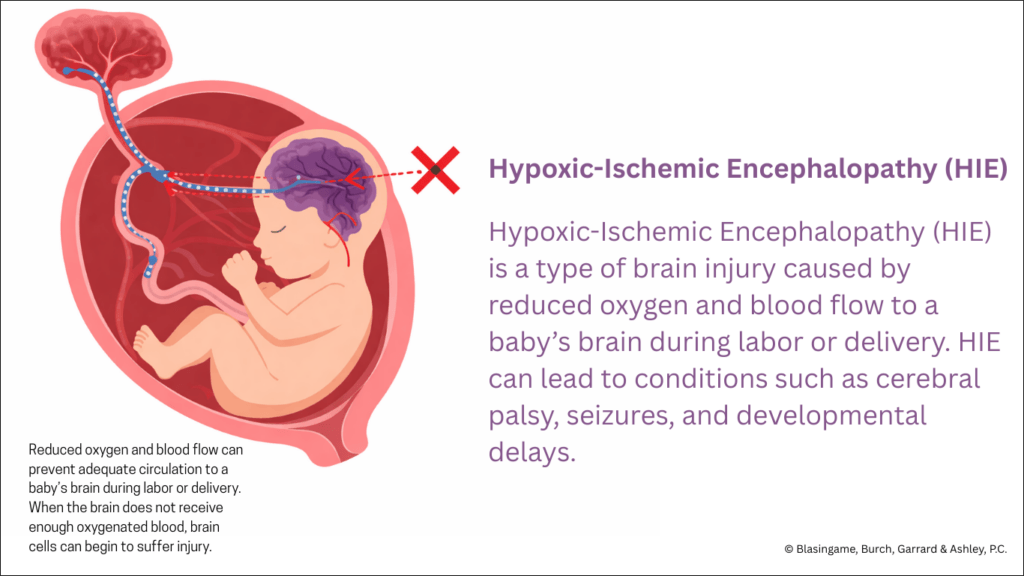
Prolonged oxygen deprivation, known medically as hypoxia, can lead to a condition called hypoxic ischemic encephalopathy, often referred to as HIE. HIE occurs when a baby’s brain does not receive enough oxygen and blood flow for a period of time during labor or delivery. This lack of oxygen can damage brain cells and interfere with normal brain function.
HIE is a serious form of brain injury. Depending on the severity of the injury, it can lead to long-term neurological conditions such as cerebral palsy, seizure disorders, developmental delays, and motor impairment. Some children may experience lifelong challenges related to movement, learning, or communication.
In severe cases, HIE can be life threatening or result in permanent disability.
Other Injuries Associated with Delayed C-Sections
While a brain injury is one of the most serious outcomes, delayed intervention during labor can also lead to other types of injury.
These may include nerve injuries, fractures, organ damage, or other trauma that can occur during prolonged or complicated labor.
The impact of these injuries can vary widely, but many children require ongoing medical care, therapy, and specialized support throughout their lives.
Is a Delayed C-Section Always Medical Malpractice?
Not every delayed C-section represents medical negligence.
Childbirth is complex, and doctors must make decisions based on the information available at the time. In some situations, complications develop suddenly and cannot be prevented.
However, when warning signs are present and medical professionals fail to recognize them or act within an appropriate time frame, questions may arise about whether the standard of care was followed.
Determining whether medical malpractice occurred often requires careful review of the medical records, including fetal monitoring strips, nursing notes, and physician documentation. These records are often analyzed by medical experts to better understand what occurred during labor and delivery.
The Long-Term Impact of Birth Injuries
When a birth injury occurs, the effects often extend far beyond the delivery room.
Children with serious birth injuries may require lifelong medical care, including surgeries, therapy, medications, and specialized equipment. Some families must modify their homes or vehicles to accommodate their child’s needs.
In addition to the emotional toll, the financial costs associated with long-term care can be substantial. Many families face challenges related to ongoing treatment, rehabilitation, and loss of future earning capacity.
How BBGA Handles Complex Birth Injury Cases
At Blasingame, Burch, Garrard and Ashley, our attorneys represent families whose children have suffered serious and often life-altering birth injuries.
These cases frequently require detailed analysis of medical records, consultation with medical experts, and evaluation by life care planners who assess the long-term needs of an injured child.
Our team works to understand the full scope of a child’s injuries and the lifelong care that may be required so families can pursue the resources necessary to support their child’s future.
This Article Concludes Our Childbirth Injury Series
This article is the final installment in our Childbirth Injury Series, which was created to help families better understand how birth injuries occur and the questions that may arise when a child suffers a serious injury during labor or delivery.
If you would like to explore other topics covered in this series, you may find the following articles helpful.
Related Articles in Our Childbirth Injury Series
Leaders in Birth Injury Litigation: BBGA Attorneys Evan Jones and Lee Atkinson
Cerebral Palsy and Birth Injuries: What Parents Should Know
Erb’s Palsy and Brachial Plexus Injuries: What Parents Should Know
Fetal Heart Monitoring Strips: What They Show and Why They Matter in Birth Injury Cases

 Loading...